
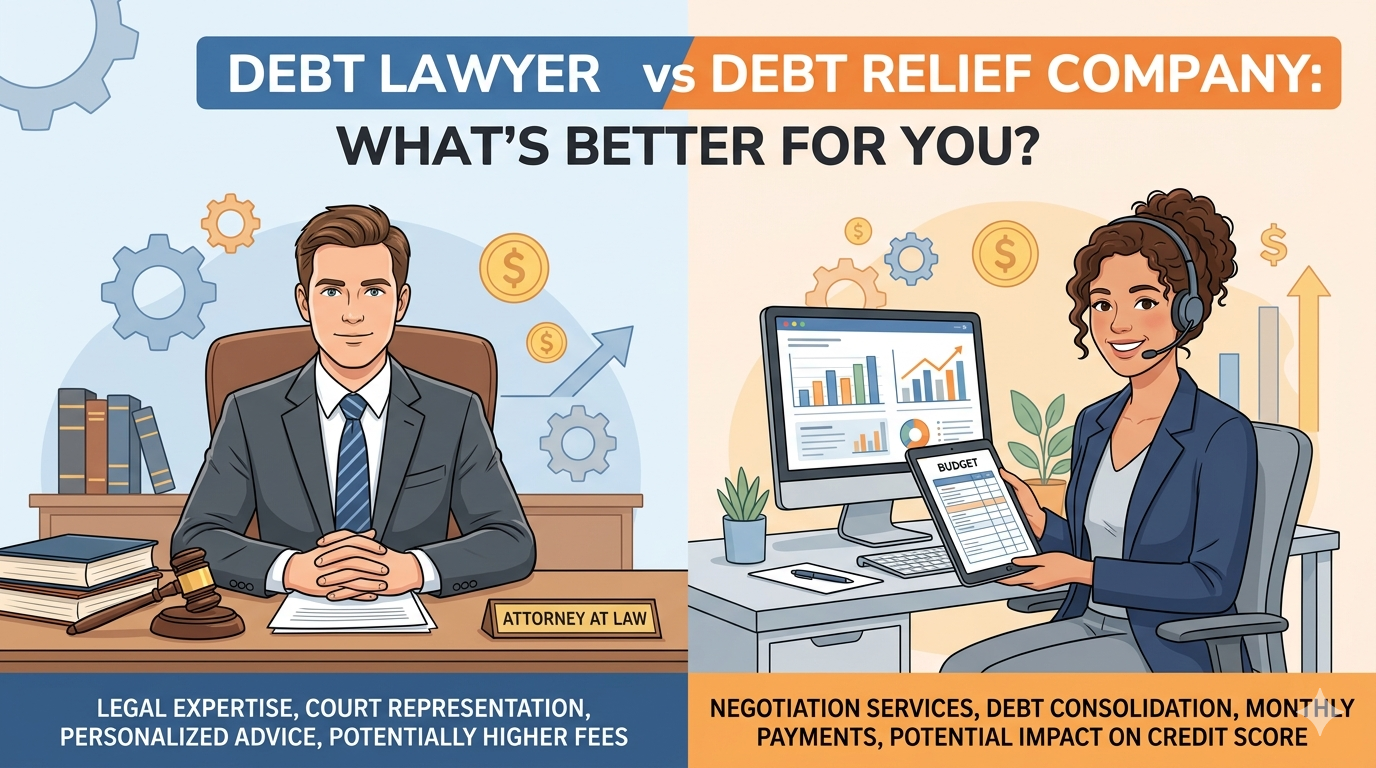
When struggling with debt, many people face a critical decision: should they hire a debt lawyer or work with a debt relief company? Both options claim to reduce financial stress, but the level of protection, legal power, and long-term results are very different.
Understanding the difference is essential before making a decision that impacts your credit, assets, and financial future.
What Does a Debt Lawyer Do?
A debt lawyer is a licensed legal professional who represents you in court and provides legal defense against creditors and debt collectors.
Unlike debt relief companies, lawyers can:
- Defend you in lawsuits
- Challenge creditor claims in court
- Negotiate legally binding settlements
- Stop or delay wage garnishment
- Identify violations of debt collection laws
For example, if you are facing legal action from creditors, a Credit Card Lawsuit Attorney can build a strong defense and fight the case in court rather than just negotiating outside the legal system.
Debt lawyers are especially useful when the situation is already legal in nature not just financial stress.
What Does a Debt Relief Company Do?
Debt relief companies are non-legal financial service providers. They do not represent you in court and cannot provide legal defense.
Their services typically include:
- Debt settlement negotiations
- Consolidation programs
- Payment restructuring
- Credit counseling
These companies often negotiate with creditors to reduce the total amount owed. However, they usually require you to stop payments temporarily, which can negatively affect your credit score.
While they may help in some situations, they are limited when legal action is involved.
Key Differences Between Debt Lawyer and Debt Relief Company
1. Legal Authority
- Debt Lawyer: Can represent you in court
- Debt Relief Company: Cannot provide legal representation
2. Protection Level
- Debt Lawyer: Full legal protection against lawsuits
- Debt Relief Company: Financial negotiation only
3. Handling Lawsuits
- Debt Lawyer: Can defend or dismiss lawsuits
- Debt Relief Company: No court involvement
If your situation involves repossession issues such as Wrongful Repossessions, legal support becomes even more critical because these cases often require litigation and evidence-based defense.
4. Cost Structure
- Debt Lawyer: Hourly or case-based legal fees
- Debt Relief Company: Percentage of settled debt
5. Risk Level
- Debt Lawyer: Lower legal risk, stronger protection
- Debt Relief Company: Higher risk if creditors sue during negotiation
When You Should Choose a Debt Lawyer
A debt lawyer is the better option if:
- You are already being sued
- You received court papers or summons
- You are facing wage garnishment
- Your debt involves legal disputes
- You suspect violations of debt collection laws
In cases involving complex financial disputes, a Florida Debt Relief Attorney can provide both defense and negotiation power under one legal strategy.
When a Debt Relief Company May Be Enough
A debt relief company may be suitable if:
- You are not being sued
- You only have unsecured debts
- You are looking for structured repayment options
- You want non-legal negotiation help
However, even in these situations, caution is necessary because creditors may still file lawsuits during the process.
Hidden Risks of Debt Relief Companies
While debt relief companies can reduce balances, they come with risks:
- Credit score damage due to missed payments
- No protection from lawsuits
- No legal defense if sued
- Fees may apply even if settlement fails
Many consumers realize too late that financial negotiation alone is not enough when legal action begins.
Why Legal Protection Matters in Debt Cases
Debt collection today is aggressive and often legal in nature. Creditors may:
- File lawsuits quickly
- Pursue wage garnishment
- Attempt asset seizure
- Challenge payment disputes
Without legal representation, consumers are often at a disadvantage.
A qualified attorney can identify violations, challenge evidence, and build a defense strategy that a debt relief company cannot provide.
Which Option Is Better Overall?
The answer depends on your situation:
- If your case is legal or already in court → Debt lawyer is essential
- If your debt is early-stage and non-legal → Debt relief company may help
However, once legal action begins, the advantage clearly shifts toward legal representation.
Final Thoughts
Choosing between a debt lawyer and a debt relief company is not just a financial decision it is a legal one.
If your situation involves lawsuits, repossession disputes, or aggressive collection tactics, legal protection becomes the stronger path. Debt relief companies may help with negotiations, but they cannot defend your rights in court.
For individuals dealing with serious debt challenges, having legal support can make the difference between financial recovery and long term consequences.
About Legal Support
In complex debt cases, experienced legal guidance is often the most effective solution. Many individuals seek help when facing lawsuits, collections, or financial disputes to protect their rights and secure better outcomes.