
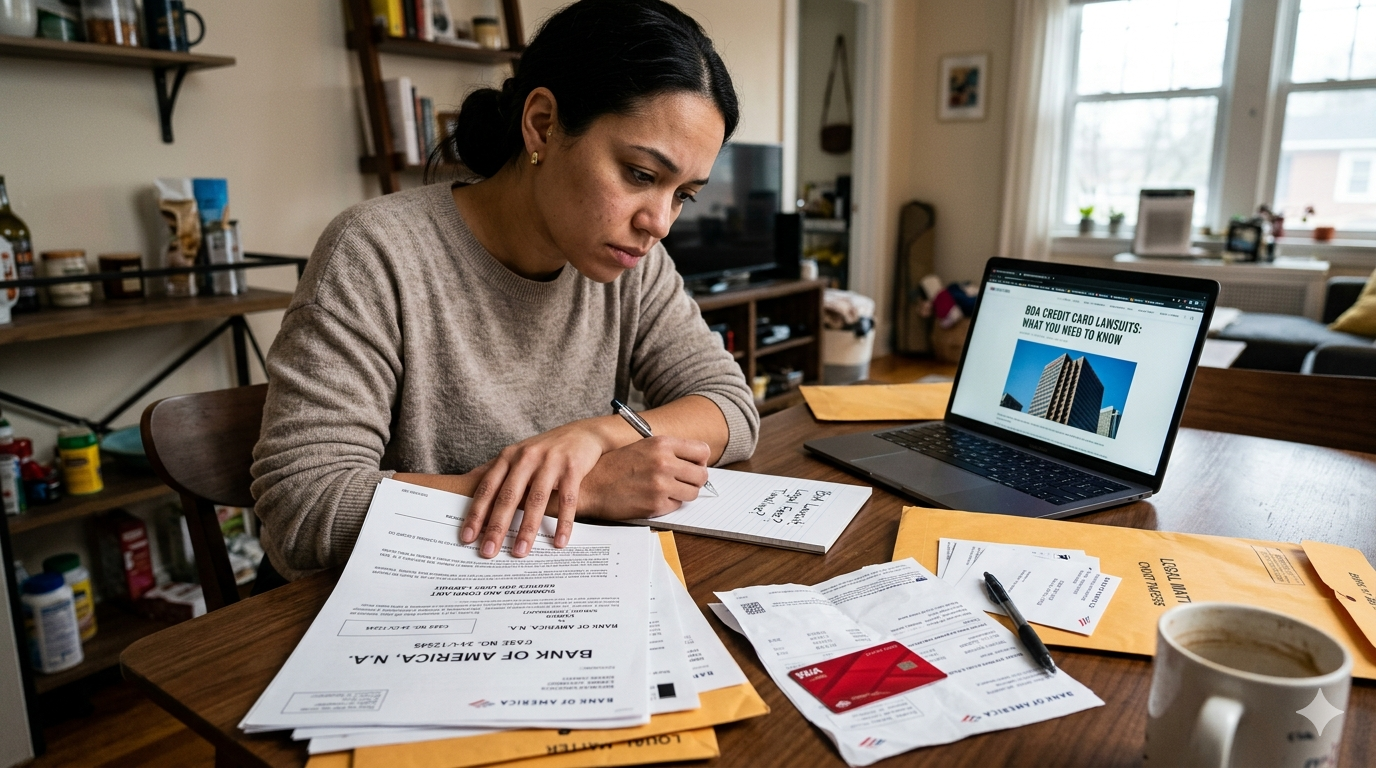
Receiving notice of a Bank of America credit card lawsuit can be alarming but it does not have to spell financial disaster. Whether you have missed payments due to unexpected hardship, a billing dispute, or a disagreement over interest charges, understanding your legal rights is the critical first step. According to the Consumer Financial Protection Bureau (CFPB), thousands of consumers are sued over credit card debt every year and many do not realize they have valid defenses that can reduce or completely eliminate the amount they owe.
This guide breaks down everything you need to know about a Bank of America credit card lawsuit from why these suits are filed, to what happens if you ignore them, to the legal defenses you can raise and when to call an attorney.
Why Does Bank of America File Credit Card Lawsuits?
Bank of America is one of the largest credit card issuers in the United States. When a cardholder stops making minimum payments, the bank typically exhausts internal collections efforts first sending letters, calling, and reporting the delinquency to the credit bureaus. If those methods fail, the bank may file a lawsuit in civil court to obtain a judgment against the debtor.
In some cases, Bank of America sells the debt to a third-party debt buyer, who then files the lawsuit in its own name. The CFPB’s database of consumer complaints consistently shows credit card debt collection among the top categories of financial disputes. Regardless of who files the suit, your legal rights remain the same. Common reasons a Bank of America credit card lawsuit is filed include:
- Non-payment for 90–180+ days
- Unresolved billing disputes that escalate
- Charged-off accounts sold to collection agencies
- Alleged fraudulent or unauthorized charges
- Accounts with high balances where litigation is cost-effective for the creditor
What Happens After You Are Served With a Lawsuit?
Once you are formally served with a summons and complaint, the clock starts ticking. In Florida, you typically have 20 days to file a written Answer with the court. This deadline is non-negotiable. As outlined by Florida Courts, failing to respond will almost certainly result in a default judgment being entered against you giving Bank of America the right to garnish your wages, freeze your bank accounts, or place a lien on your property.
A default judgment is one of the worst outcomes for a consumer because it is entered without any examination of the merits of the case. Many consumers who had valid defenses never got to use them simply because they did not respond in time.
Common Defenses Against a Bank of America Credit Card Lawsuit
Just because Bank of America or a debt buyer has filed suit does not mean they will automatically win. There are several powerful legal defenses that a skilled attorney may raise on your behalf:
1. Statute of Limitations
Every state imposes a time limit on how long a creditor can sue to collect a debt. Under Florida Statute §95.11, the statute of limitations on credit card debt is generally five years from the date of the last payment or account activity. If the lawsuit was filed after this window has closed, the case may be dismissed entirely regardless of whether you actually owe the debt.
2. Lack of Standing
When Bank of America sells a debt to a third-party collector, the buyer must prove it legally owns the debt and has the right to sue. If the chain of title is broken or the documentation is insufficient, the court may rule the plaintiff lacks standing to bring the lawsuit at all.
3. Improper or Insufficient Documentation
Creditors must prove the existence of the debt, the amount owed, and the debtor’s identity through competent evidence. Affidavits from people who have no personal knowledge of the account, missing account statements, or unsigned cardholder agreements can all serve as grounds for dismissal.
4. Incorrect Amount Claimed
Credit card balances can balloon quickly with late fees, over-limit fees, and compounding interest. An attorney can scrutinize the calculation to ensure every charge is lawful, properly documented, and accurately totaled. Even if you owe some money, you may not owe as much as the lawsuit claims.
5. Identity Theft or Fraud
If the account was opened or used fraudulently, you have the right to present evidence of identity theft as a complete defense. You can obtain a free copy of your credit report at AnnualCreditReport.com to review all accounts tied to your name. This defense requires prompt action and thorough documentation.
What Happens If You Ignore the Lawsuit?
Ignoring a Bank of America credit card lawsuit is one of the costliest mistakes a consumer can make. A default judgment empowers the creditor to pursue aggressive collection tactics that can significantly disrupt your financial life. In Florida, creditors with a valid judgment can:
- Garnish up to 25% of your disposable earnings
- Levy (freeze and seize funds from) your bank accounts
- Place a lien on real estate you own
- Charge post-judgment interest that continues to accumulate
The judgment also remains on your credit report and public records, making it harder to rent an apartment, obtain a mortgage, or pass a background check for employment. Acting even at a late stage is almost always better than not acting at all.
Can You Settle a Bank of America Credit Card Lawsuit?
Yes! settlement is often possible at any stage of the litigation process, even after a lawsuit has been filed. Bank of America and debt buyers regularly settle cases for less than the full amount claimed, particularly when the defendant is represented by an attorney who raises credible defenses.
A negotiated settlement can reduce the principal balance, eliminate fees and interest, set up a manageable payment plan, or in some cases result in a complete dismissal. The key is to negotiate from a position of knowledge understanding what defenses you have and how strong the creditor’s case really is.
Know Your Rights Under Federal and State Law
Consumers are protected by a robust framework of federal and state laws. The Fair Debt Collection Practices Act (FDCPA), enforced by the Federal Trade Commission, prohibits third-party collectors from using abusive, deceptive, or unfair methods. The Fair Credit Reporting Act (FCRA), overseen by the CFPB, governs how debts are reported to credit bureaus. And Florida’s own consumer protection statutes offer additional remedies beyond federal law.
If a debt collector or Bank of America has violated any of these laws contacting you at prohibited hours, threatening legal action they cannot take, or reporting inaccurate information to the credit bureaus you may be entitled to statutory damages, attorney’s fees, and other relief. In some cases, these violations can be used as leverage to negotiate a more favorable resolution.
When Should You Hire an Attorney?
The moment you receive a summons is the right time to consult an attorney not after the deadline has passed. At Consumer Rights Orlando, we understand how stressful it is to face a lawsuit from a major bank. A dedicated Credit Card Lawsuit Attorney Florida can review the complaint against you, identify all viable defenses, communicate with the opposing party on your behalf, negotiate a fair settlement, and represent you in court if necessary.
Having legal representation levels the playing field when you are up against a large financial institution with experienced collections attorneys. You can also verify that any attorney you hire is licensed through the Florida Bar’s official attorney search tool.
Immediate Steps to Take If You Are Sued by Bank of America
Do not panic but do act quickly. Here is what you should do:
- Read the summons carefully and note your 20-day response deadline.
- Gather all documents related to the account statements, correspondence, and payment records.
- Pull a free copy of your credit report at AnnualCreditReport.com to review all account details.
- Do not ignore the lawsuit or assume it will go away on its own.
- Do not make payments or admit liability before speaking with an attorney doing so could waive key defenses.
- File a complaint with the CFPB at consumerfinance.gov if a debt collector has violated your rights.
- Consult a consumer law attorney as soon as possible to evaluate your full range of options.
Final Thoughts: You Have More Options Than You Think
A Bank of America credit card lawsuit is serious, but it is far from the end of the road. Many consumers successfully defend against these suits, negotiate favorable settlements, or have cases dismissed entirely all because they took action and sought qualified legal help. The worst thing you can do is nothing.
Remember: credit card companies and debt buyers count on consumers feeling overwhelmed and not responding. When you understand the law and the resources available to you through agencies like the CFPB and the FTC and stand up with the help of an experienced attorney, the outcome can be very different. If you have been served with a lawsuit, reach out to a consumer law attorney today and take the first step toward protecting your financial future.