
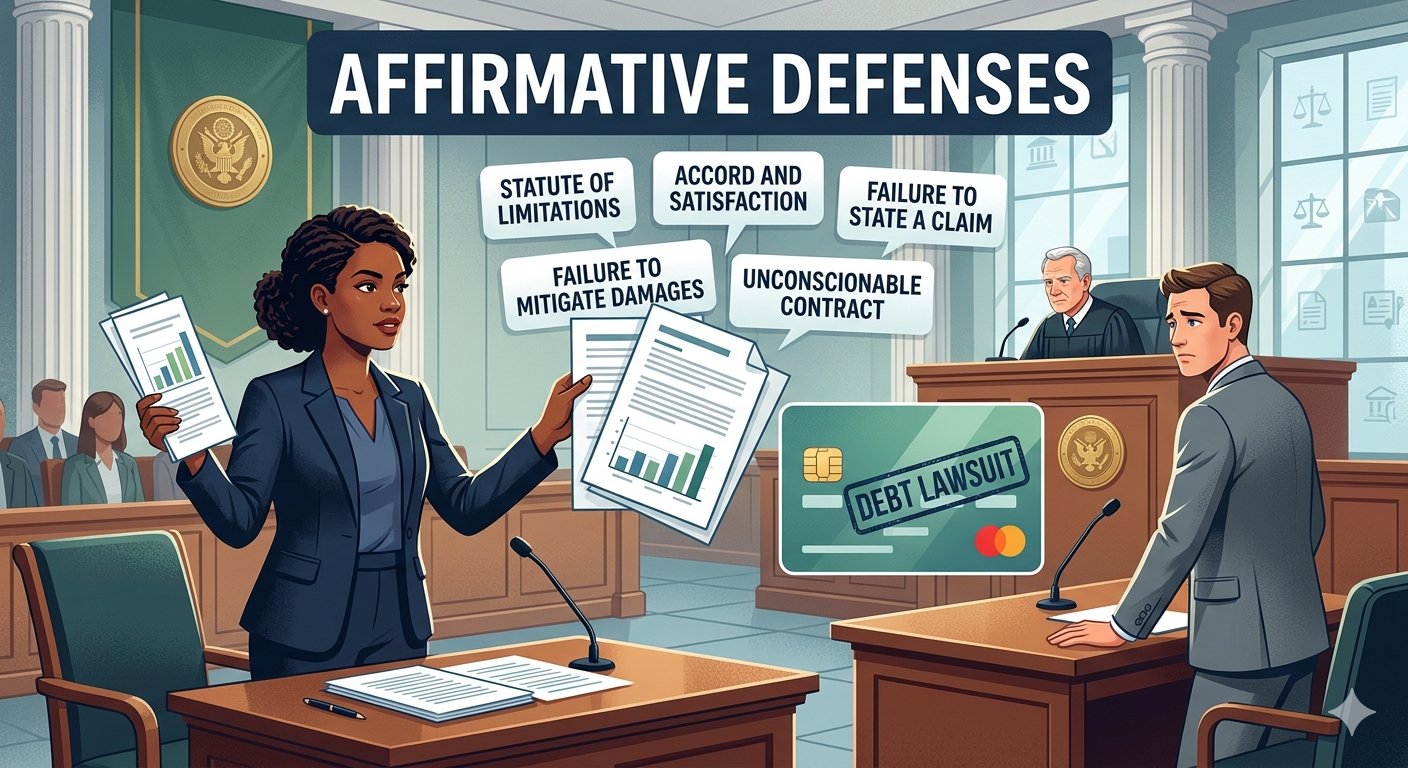
When facing a credit card debt lawsuit, most defendants assume the outcome is already decided. That assumption is often wrong. The legal system provides powerful tools known as affirmative defenses that can completely change the direction of your case.
Understanding how these defenses work is not just helpful it is essential. Whether the goal is dismissal, reduction, or negotiation leverage, using the right defense strategy can shift control back into your hands.
What Are Affirmative Defenses in a Credit Card Debt Lawsuit?
An affirmative defense is a legal argument that accepts part of the claim but introduces new facts or legal reasons why the creditor should not win.
Instead of simply denying the debt, this approach challenges the validity, enforceability, or legality of the claim itself.
In practical terms, this means:
- A lawsuit can fail even if a debt once existed
- Creditors must meet strict legal standards
- Missing documentation or procedural errors can work in your favor
Affirmative defenses are not technicalities they are foundational protections built into the legal system.
Why Affirmative Defenses Are Critical
Debt collection lawsuits often rely on volume, not precision. Many cases are filed with:
- Incomplete records
- Weak documentation
- Automated legal filings
This creates opportunity.
A well-structured defense can:
- Force the creditor to prove every element of their claim
- Expose gaps in documentation
- Increase the likelihood of dismissal
- Strengthen settlement positioning
In many cases, the burden shifts back to the creditor and that is where cases begin to fall apart.
Most Effective Affirmative Defenses Explained
1. Statute of Limitations
Every debt has a legal deadline for enforcement. If a lawsuit is filed after this period expires, it becomes unenforceable.
This is one of the most powerful defenses because:
- It can result in immediate dismissal
- It does not depend on disputing the debt itself
Timing is everything in these cases, and even a small miscalculation by the creditor can invalidate the claim.
2. Lack of Standing
Credit card debts are frequently sold to third-party buyers. These entities must prove they legally own the specific debt they are attempting to collect.
Without:
- A complete chain of assignment
- Verified account records
The case lacks standing.
Courts require clear proof not assumptions.
3. Failure to State a Claim
A lawsuit must clearly explain:
- Who owes the debt
- How much is owed
- Why the defendant is liable
If these elements are vague or missing, the complaint can be challenged.
This defense targets the structure of the lawsuit itself, not just the facts behind it.
4. Improper Service of Process
Legal procedure matters. If notice of the lawsuit is not delivered correctly, the case may be invalid.
Improper service includes:
- Delivery to the wrong address
- Serving the wrong individual
- Failure to follow legal protocols
Due process is not optional it is required.
5. Identity Theft or Incorrect Defendant
Not all debts are valid. Errors happen, and identity theft is more common than many realize.
If the debt:
- Does not belong to you
- Is linked to fraudulent activity
- Contains inaccurate personal information
Then liability can be challenged directly.
6. Payment, Settlement, or Discharge
A creditor cannot legally pursue a debt that has already been:
- Paid in full
- Settled
- Discharged through bankruptcy
Documentation becomes critical here. Financial records often determine the outcome.
7. Violations of Consumer Protection Laws
Debt collectors are bound by strict legal standards. If those standards are violated, it can weaken or even invalidate their claim.
Common violations include:
- Harassment or intimidation
- Misrepresentation of the debt
- Unlawful communication practices
In some cases, these violations create grounds for counterclaims.
8. Unenforceable or Unfair Contract Terms
Credit agreements must meet legal standards of fairness and transparency.
If a contract includes:
- Excessive or hidden charges
- Misleading terms
- Unconscionable provisions
It may not be enforceable in court.
How Affirmative Defenses Influence Case Outcomes
Affirmative defenses do more than challenge a lawsuit—they reshape it.
Possible outcomes include:
- Full dismissal due to legal deficiencies
- Reduced liability through negotiation
- Delayed proceedings that pressure creditors
- Stronger leverage for favorable settlements
Creditors often depend on defendants not responding. A strategic defense disrupts that expectation.
Key Steps to Build a Strong Defense
Respond Within Deadlines
Failure to respond can result in automatic judgment. Timing is critical.
Assert All Applicable Defenses Early
Defenses must be raised in the initial response or risk being waived.
Focus on Evidence
Documentation, timelines, and records are central to every defense.
Challenge Every Assumption
Do not assume the creditor’s claim is accurate or complete.
Common Mistakes to Avoid
- Ignoring the lawsuit entirely
- Admitting liability without reviewing evidence
- Missing filing deadlines
- Failing to challenge weak documentation
These mistakes often lead to avoidable judgments.
Strategic Insight: Why Many Credit Card Lawsuits Fail
A significant number of credit card debt lawsuits are dismissed or settled because:
- Documentation is incomplete
- Debt ownership cannot be proven
- Legal procedures are not followed correctly
This is not accidental it reflects systemic weaknesses in high-volume debt litigation.
A well-prepared defendant can take advantage of these gaps.
Final Perspective
Affirmative defenses in a credit card debt lawsuit are not just legal tools—they are strategic leverage. They shift the burden of proof, expose weaknesses, and create real opportunities to challenge the claim.
The difference between losing and winning often comes down to how effectively these defenses are used.
For individuals navigating this process, Consumer Rights Orlando represents a focused approach to protecting legal rights and challenging unfair debt collection practices with precision and strategy.
FAQs:
What is the strongest affirmative defense in a credit card debt lawsuit?
The statute of limitations is often the most effective, especially when the filing deadline has passed.
Can a credit card lawsuit be dismissed with affirmative defenses?
Yes, if the creditor fails to meet legal requirements such as proof of ownership or timely filing.
Do debt buyers need proof to sue?
Yes, they must provide clear documentation showing they legally own the debt and that the amount is accurate.
What happens if no defense is filed?
The court may issue a default judgment, allowing collection actions like wage garnishment.
Are affirmative defenses required in the first response?
Yes, most defenses must be included in the initial answer or they may be permanently waived.